Physical Address
304 North Cardinal St.
Dorchester Center, MA 02124
Physical Address
304 North Cardinal St.
Dorchester Center, MA 02124


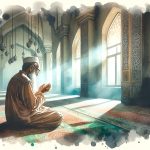
Ṣalat al-Ẓuhr, commonly known as Dhuhr prayer, is the second of the five obligatory daily prayers in Islam. It is performed after the sun has passed its highest point in the sky and before the time of ʿAsr (Afternoon Prayer) begins.
In our previous lesson, we explained how to perform Salat al-Ṣubḥ (Fajr Prayer), including the general movements and essential parts of the prayer. In this lesson, we will build on that knowledge by focusing on what makes Dhuhr different, including its four obligatory rakʿahs, its silent Qur’anic recitation, and the Sunnah prayers performed before and after it.
Our aim is to understand how to perform Dhuhr prayer step by step, using evidence from the Qur’an and authentic Sunnah, in a manner that is clear and practical for every Muslim.
Prayer is one of the greatest acts of worship in Islam and an essential pillar of the religion. Every adult Muslim who is accountable for their actions must observe the five obligatory daily prayers, unless a recognised Islamic exemption applies.
Allah says in the Qur’an:
إِنَّ الصَّلَاةَ كَانَتْ عَلَى الْمُؤْمِنِينَ كِتَابًا مَوْقُوتًا
“Indeed, prayer has been decreed upon the believers at specified times.”
Reference: Qur’an, Sūrat al-Nisāʾ (4:103).
This verse reminds us that the obligatory prayers must be observed at their prescribed times. Dhuhr is not simply a break in the middle of the day; it is an opportunity to remember Allah, renew our faith, and remain obedient to Him amid our daily responsibilities.
The time for Dhuhr begins when the sun passes its highest point in the sky, an event known as zawal. At this point, the sun begins to move towards the west. Dhuhr continues until the time of ʿAsr begins.
The Prophet Muḥammad ﷺ explained the prayer times in an authentic narration reported by ʿAbdullah ibn ʿAmr (may Allah be pleased with him).
The Prophet ﷺ said that the time of Dhuhr begins when the sun passes its zenith and continues until the time of ʿAsr arrives.
Reference: Ṣahih Muslim, Hadith 612, in the commonly used numbering.
The exact clock time for Dhuhr varies according to your location and the time of year. Therefore, Muslims should consult a reliable local prayer timetable rather than assuming that Dhuhr begins at the same clock time everywhere.
Allah also commands the believers to establish prayer at its prescribed times. A Muslim should make a sincere effort to perform Dhuhr within its proper time and avoid delaying it unnecessarily.
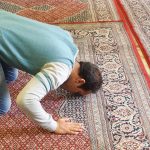
The obligatory Dhuhr prayer consists of four rakʿahs. A rakʿah is one complete unit of prayer, including standing, bowing, and prostration in the prescribed order.
The four obligatory rakʿahs are performed as follows:
First rakʿah: Surat al-Fatihah followed by another portion of the Qur’an.
Second rakʿah: Surat al-Fatihah followed by another portion of the Qur’an, followed by the first tashahhud.
Third rakʿah: Surat al-Fatihah, followed by bowing and prostration.
Fourth rakʿah: Surat al-Fatihah, followed by the final sitting, tashahhud, blessings upon the Prophet ﷺ, and taslim to conclude the prayer.
Unlike Fajr, which has two obligatory rakʿahs, Dhuhr has four. The general movements and postures are explained in our previous Fajr lesson, so readers who need a reminder can refer to that guide.
The First Rakʿah
Begin the prayer in the same manner explained in the Fajr lesson, making the intention in your heart to perform the obligatory Dhuhr prayer and commencing with the opening takbir: Allahu Akbar (Allah is the Greatest).
Recite Surat al-Fatihah, followed by another surah or a suitable portion of the Qur’an. Then complete the bowing, rising from bowing, and two prostrations, maintaining tranquillity in each position.
Important difference: During Dhuhr, the Qur’anic recitation is generally silent, unlike the audible recitation in Fajr.
The Second Rakʿah
Rise for the second rakʿah and recite Surat al-Fatihah, followed by another portion of the Qur’an. Complete the bowing and two prostrations as explained in the previous lesson.
After the second prostration, remain seated for the first tashahhud. Recite the prescribed testimony of faith and words of remembrance taught in the Fajr lesson.
After completing the first tashahhud, rise for the third rakʿah, saying Allahu Akbar as you move into the standing position.
The Third Rakʿah
In the third rakʿah of the obligatory Dhuhr prayer, recite Surat al-Fatihah. The established practice is that the worshipper does not routinely add another surah after it in this rakʿah.
Complete the bowing, rise from bowing, and perform the two prostrations correctly and calmly. Then rise for the fourth rakʿah.
The Fourth Rakʿah
In the fourth rakʿah, recite Surat al-Fatihah and complete the remaining movements of the prayer.
After the second prostration, sit for the final tashahhud. Recite the tashahhud and send blessings upon the Prophet Muḥammad ﷺ, including the well-known Salat Ibrahimiyyah.
Conclude the prayer with taslim, turning the head to the right and then to the left while saying:
As-salamu ʿalaykum wa raḥmatullah.
This completes the four obligatory rakʿahs of Dhuhr.
One of the most important differences between Dhuhr and Fajr concerns the recitation of the Qur’an.
Dhuhr is generally a silent prayer. This means that the worshipper recites the Qur’an quietly rather than reciting it aloud as is done in Fajr.
However, silent recitation does not mean abandoning the Qur’an or merely moving the lips without reciting. The worshipper must still recite Surat al-Fatihah and the appropriate Qur’anic passages according to the prayer’s prescribed method.
Authentic evidence for the Prophet’s practice is found in a narration from Khabbab ibn al-Aratt (may Allah be pleased with him). He was asked whether the Messenger of Allah ﷺ recited during the Zuhr and ʿAṣr prayers. He indicated that they could recognise his recitation by the movement of his beard.
Reference: Ṣahih al-Bukhari, Hadith 746, in the commonly used numbering.
This narration establishes that the Prophet ﷺ recited during these prayers, even though he did not normally recite aloud. It is therefore incorrect to treat Dhuhr as a prayer without Qur’anic recitation.
When praying in congregation, the imam also performs Dhuhr with silent recitation, following the established Sunnah.
In addition to the four obligatory rakʿahs, voluntary Sunnah prayers are established before and after Dhuhr. These are separate from the obligatory prayer and must not be confused with its four required rakʿahs.
Four Rakʿahs Before Dhuhr
It is authentically reported that the Prophet ﷺ regularly observed voluntary prayers before Dhuhr. Umm Habibah (may Allah be pleased with her) reported that the Messenger of Allah ﷺ said:
“Whoever prays twelve rakʿahs during the day and night, a house will be built for him in Paradise.”
Reference: Ṣahih Muslim, Hadith 728, in the commonly used numbering.
Other authentic narrations explain that these twelve regular Sunnah rakʿahs include four before Dhuhr and two after it, alongside the Sunnah prayers associated with the other obligatory prayers.
Reference: Ṣahih Muslim, Hadith 729, in the commonly used numbering.
Therefore, performing four voluntary rakʿahs before Dhuhr is an established Sunnah practice.
Two Rakʿahs After Dhuhr
Two voluntary rakʿahs after the obligatory Dhuhr prayer are also established in authentic narrations. These are part of the regular Sunnah prayers that the Prophet ﷺ observed.
A Muslim who wishes to follow this regular practice should perform the four Sunnah rakʿahs before Dhuhr and the two Sunnah rakʿahs afterwards.
There are also authentic reports describing additional voluntary prayers connected with Dhuhr. Scholars discuss the details of some of these practices, including the number and manner of the additional rakʿahs. Beginners should learn the established regular Sunnah first and understand that these voluntary prayers do not increase the number of obligatory Dhuhr rakʿahs.
When learning how to perform Dhuhr prayer, be mindful of the following mistakes:
Praying only two obligatory rakʿahs: The obligatory Dhuhr prayer consists of four rakʿahs, unlike Fajr.
Reciting aloud throughout the prayer: Dhuhr is generally performed with silent Qur’anic recitation, following the Prophet’s ﷺ established practice.
Confusing Sunnah with obligatory rakʿahs: The regular voluntary prayers before and after Dhuhr are additional acts of worship, not part of the four obligatory rakʿahs.
Deliberately delaying Dhuhr beyond its prescribed time: A Muslim should observe the prayer within its proper time and avoid unnecessary delay.
Rushing through the prayer: Bowing, prostration, and the other essential positions should be performed with tranquillity rather than haste.
Learning the correct method takes time, especially for beginners. If you are uncertain about a particular mistake, seek reliable Islamic guidance rather than hastily assuming that your prayer is invalid.
Salat al-Ẓuhr is an essential part of a Muslim’s daily worship. Its four obligatory rakʿahs, silent Qur’anic recitation, and associated Sunnah prayers distinguish it from Fajr, although both prayers follow the same general principles of standing, bowing, prostrating, and remembering Allah.
Make an effort to perform Dhuhr at its prescribed time, learn its movements and recitations carefully, and observe the authentic Sunnah according to your ability and knowledge.
If you have not yet studied our previous lesson, How to Perform Salat al-Ṣubḥ (Fajr Prayer), we encourage you to read it to understand the general procedures of prayer more fully.
Continue learning with DeenBeacon as we explore the correct methods of performing the five daily prayers using evidence from the Qur’an and authentic Sunnah. May Allah help us establish our prayers correctly and accept our acts of worship. Amin.